Not All Phantoms Are Created Equal
 |
| https://theinstantwhen.taittinger.fr/en/the-phantom-of-the-opera/ |
It was inevitable to discuss the Phantom when mentioning the sequel to The Phantom of the Opera.
Many vocalists had played this intimidating and tragic role, and each brought different elements to the story. The magic lay not merely in acting skills, but in the quality of sound — in tone density, resonance, and projection.
Most audiences knew the “first-generation Phantom,” Michael Crawford, and many were moved by the love tragedy he created with Sarah Brightman. Crawford gained worldwide popularity precisely because of this role. His Phantom was airy and ghostly, as his voice lacked tonal density. When he said “Sing for me,” it sounded more like a plea than a demand, because his voice did not naturally carry authority.
What many may not have realized was that Crawford was not Andrew Lloyd Webber’s first choice.
Before The Phantom of the Opera opened at Her Majesty’s Theatre in London in 1986, Webber held a private workshop at Sydmonton Court in 1985, where Colm Wilkinson performed the Phantom alongside Brightman as Christine and Clive Carter as Raoul. Webber praised Wilkinson’s “unique, gritty color,” saying it made the Phantom feel dangerous, and he wanted him for the London premiere. However, Wilkinson was already committed to Jean Valjean in Les Misérables. He later took the Phantom role in Toronto in 1989 and remained in the part for over four years.
If one compared Crawford’s voice with Wilkinson’s, the difference was immediate. Wilkinson’s Phantom felt like a real flesh-and-blood man trapped in a wrecked body and fractured mind. His tonal density was significantly richer, and his resonance broader. That density gave him the vocal authority the role demanded.
Then came Anthony Warlow, widely considered the “gold standard” Phantom. When he first performed the role in Australia, he was only 28, making him the youngest Phantom in a major production at the time. Yet his age did not limit him. His extra-rich tonal density, classical opera training, baritonal texture, and expansive resonance created unmistakable vocal weight. He could sing high notes without thinning out. When he sustained a climactic phrase, the tone did not sharpen — it expanded. This combination naturally produced authority. When Warlow said “Sing for me,” it never sounded like a request. It sounded non-negotiable. That was the weight an imperial Phantom should have carried.
Then came the modern version — Ramin Karimloo. He portrayed the Phantom in the 25th Anniversary production and later in the sequel. Karimloo’s Phantom, especially when singing opposite Sierra Boggess, was romantic, vulnerable, and tragic. His tonal texture shared some density with Warlow’s, though with less expansive resonance. What he added was emotional intensity and theatrical nuance. In his interpretation, the Phantom was no longer a distant shadow, nor an imperial force, but a man tortured by a love he could never materialize in the real world.
There was a Phantom medley with Christine (played by Sarah Brightman) — Colm Wilkinson, Anthony Warlow, John Owen-Jones, and Peter Jöback formed the Phantom quartet at the Royal Albert Hall in London in 2011. In fact, there was a fifth Phantom in the footage — Ramin Karimloo — and a second Christine, Sierra Boggess, as the two were playing the lead roles in the production that night.
By listening to the two signature Phantom songs, “The Phantom of the Opera” and “Music of the Night,” the audience could immediately compare the voices. The results were apparent:
- Wilkinson began with a dense and compact tone, along with broad resonance and towering authority;
- Warlow carried an extremely dense tone, operatic resonance, and a commanding baritone with monumental authority;
- John Owen-Jones conveyed a moderately dense tone, bright resonance, clean vocal texture, and milder authority;
- Ramin Karimloo (the masked Phantom) carried less density and sometimes thinned slightly when moving into speech-mix mode, but his theatrical expression created an intimidating Phantom;
- Peter Jöback had not yet played the Phantom in 2011, but he was present as a future torchbearer, as he would take on the title role in 2013. He was a strong rock vocalist; however, when standing on the same stage as the other Phantoms, he seemed comparatively weaker, as his tone density, resonance, and breath support appeared less robust than the rest.
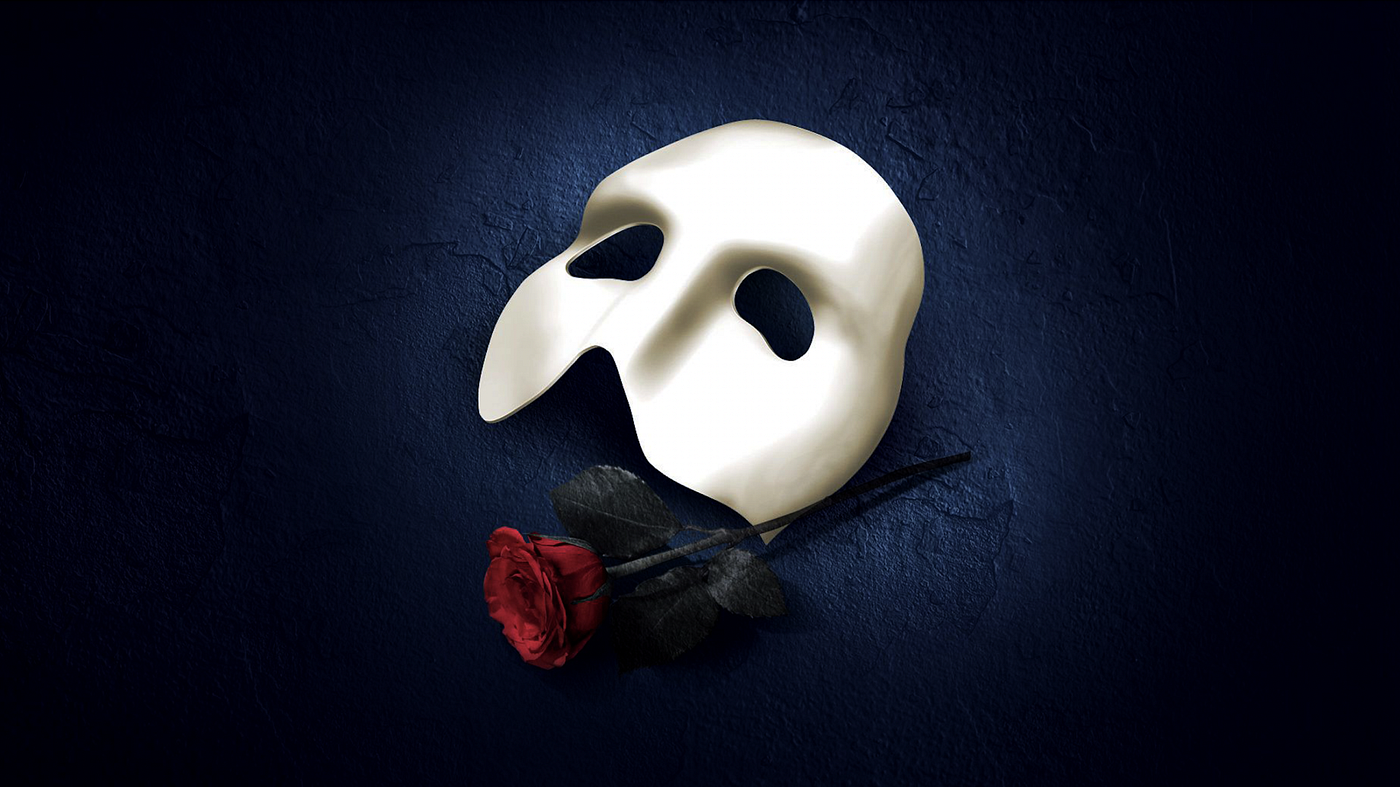
The Phantom becomes an enduring legend not because of the white mask, the black cloak, or the towering pipe organ, but because of the voice.
Tone density, resonance, breath control and support determine the character of the role. He can be an imperial Phantom commanding love, an airy shadow whispering affection, or a fractured man offering desperate adoration. There is no absolute right or wrong — only preference.
After all, music is subjective. As the saying goes, one person’s medicine is another’s poison.
For me, no other voice carries the same monumental authority and richness as Anthony Warlow’s. When he sings, the Phantom truly rules.


Comments
Post a Comment